
Searching Livingston Parish Criminal Dockets
Start with the 21st Judicial District Attorney docket index, the public entry point for many Livingston Parish criminal settings. It posts PDFs for duty, misdemeanor duty, criminal jury, priority, add-on, and related dates by division. Those lists are current when posted. The District Attorney still warns that settings can change. Remember that these PDFs are setting lists, not a party-name database or a full case register. Need the full docket, minutes, or a copy? Go to the Livingston Parish Clerk of Court Criminal Department.
- Read the caption, citation, or prior notice to identify the issuing court, parish, division, and any docket or file number.
- For a 21st JDC setting, open the DA docket index and select the Livingston Parish PDF matching the date and division.
- Match the person, docket number, file number, charge, and setting type. Keep docket and file numbers separate.
- Call the Clerk at (225) 686-2216 or visit Criminal Records when a minute, disposition, filed document, or confirmation is needed.
- Use the city court or mayor's court clerk when the citation arose inside that municipality rather than assuming it belongs in the parish criminal system.
Older matters work differently. The Clerk's official criminal record-check form covers records from 1990 through the current date, and a second option covers records before 1990 through the current date. Each name variation needs its own form and fee.
Livingston Parish Criminal Court Routes
Where a Livingston Parish criminal case lands depends on offense level and location. The Clerk's Criminal Department files the District Attorney's formal charges. These cover parish felonies. They also cover misdemeanors and traffic charges outside municipal city limits. A violation inside city limits can belong to another court. The 21st JDC Division L is identified as the Misdemeanor, Traffic, and Juvenile Court. Juvenile files stay confidential.
| Venue | Criminal docket role | Best first contact |
|---|---|---|
| 21st JDC / Clerk | Livingston felonies and parish-level misdemeanor or traffic matters outside city limits | DA setting PDFs, then Clerk Criminal Records |
| Division L | District misdemeanor, traffic, and juvenile track | 21st JDC division information and Clerk |
| Denham Springs City Court | City traffic, ordinance, and criminal matters | Denham Springs City Court |
| Walker Municipal Court | Walker traffic and municipal misdemeanor matters | Walker court rules and clerk |
The 21st JDC also covers St. Helena and Tangipahoa Parishes. So a district result is not automatically a Livingston Parish criminal docket. Check the printed parish, division, and case details first.
Inside a Livingston Parish Criminal Docket
A posted Livingston Parish criminal setting can name the court, parish, state, setting date, judge, division, felony or jury dates, and a grouping such as bonded, jail, priority, add-on, or special setting. The public sample also uses role and case fields. Those details help you locate a case. They do not establish guilt. Nor do they give the complete history or the current legal effect of a charge.
| ADA / PD / COC | Assistant district attorney, public defender, and Clerk of Court role headings in the posted format. |
|---|---|
| Docket number | The court identifier used to locate a matter. It may be distinct from the file number. |
| Reason and type | The stated purpose and category of the setting, not a final ruling by themselves. |
| Charge and offense | Filed allegation or statute description unless a disposition or signed judgment establishes a later result. |
| Appearance and service | Recorded attendance or notice information for that setting. |
Arrest date, defense counsel, surety, and bond amount may also appear. A full minute or certified document can carry information a scheduled docket line does not.
Reading Livingston Parish Setting Labels
Setting headings narrow a list, but they do not resolve a case. "Bonded" and "jail" mark the list grouping. "Priority," "add-on," and "special setting" describe scheduling treatment. Read them with the document date. Confirm with the court. A charge line stays a filed accusation unless the official record states a disposition or judgment.
- Arraignment
- A criminal proceeding where the charge is addressed and a plea or next step is taken.
- Continuance
- A postponement or reset. It changes timing, not necessarily the outcome.
- Disposition
- The recorded procedural result, which may require the minute or judgment for full context.
- Minute entry
- A Clerk-maintained summary of what occurred, not a word-for-word transcript.
- Special setting
- A specifically assigned hearing or trial setting outside a routine list.
Note: The official sources publish no universal Livingston Parish criminal code dictionary, so confirm any abbreviation with the Clerk or court.
How a Criminal Case Moves
A district criminal docket follows procedural events over time, while a DA PDF may show only the next scheduled point. A common sequence is Filing → Arraignment → Pretrial → Plea or Trial → Disposition → Sentencing. A continuance or a changed docket position does not end the case. The current minute, signed order, or Clerk confirmation controls when a result matters.
Local timing matters for criminal bond reductions and Article 701 filings. The Clerk's notice says they must be filed by noon Wednesday. That is the cutoff for the following week's docket. Criminal e-filing goes through eClerks LA and routes through Clerk Connect. Treat e-filing as a filing channel. It is not a verified public criminal search portal.
Livingston Parish Criminal Record Requests
The Clerk of Court sells a court-only criminal record check for $20 per name or form. Send the person's name and date of birth. Include the record range you want, mailing details, your signature, a phone number, and the date. What comes back on the affidavit is the court docket number or numbers, the offense information, and a short disposition description. That product is narrow. It is not a request for one specific minute entry, judgment, transcript, or a wider agency record.
A written disposition is a separate item. The Clerk FAQ prices it at $10 per name per charge and gives a mailing address: Criminal Filing Desk, P.O. Box 1150, Livingston, LA 70754. For a word-for-word hearing record, a 21st JDC transcript request goes to a certified court reporter and should name the case, docket number, judge, and hearing date or dates. Minutes only summarize; the transcript is the full account.
Division L's court information lays out the district court track. That track handles misdemeanor, traffic, and juvenile matters.
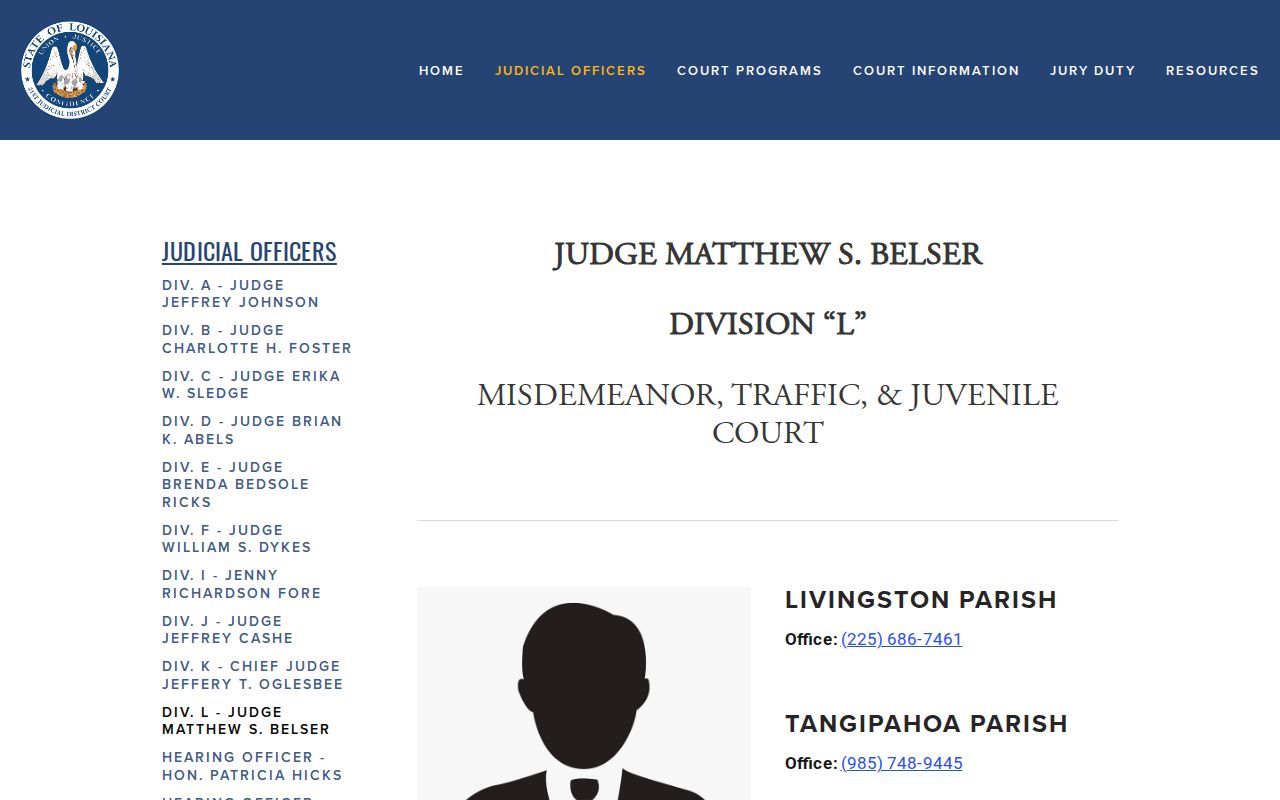
That division distinction keeps a searcher from treating every Livingston Parish criminal docket as a felony docket.
Courts That Hold Criminal Dockets
The Livingston Parish Clerk of Court holds the district-court criminal materials, with minute clerks serving the 21st JDC divisions. City and mayor's courts keep their own municipal dockets. Denham Springs maintains its own court path. Walker routes municipal cases through its clerk and court rules. For a citation, let the court name and appearance address on the ticket control your next step.
The criminal department sits at the Clerk's 20300 Government Boulevard office in Livingston. The Clerk also offers a phone line and courthouse counter access. Mail requests work for qualifying criminal products. DA PDFs cover scheduled settings. City-court channels round out the options. Livingston Parish has no single statewide public case-search portal.
Livingston Parish Juvenile Record Limits
Louisiana Children's Code Article 412 keeps juvenile court records confidential. A Division L label on a Livingston Parish criminal docket calendar does not open a juvenile file. General review stays closed. Access runs through a permitted route, not through a setting list. The statute itself spells out who may see these records and how to ask.
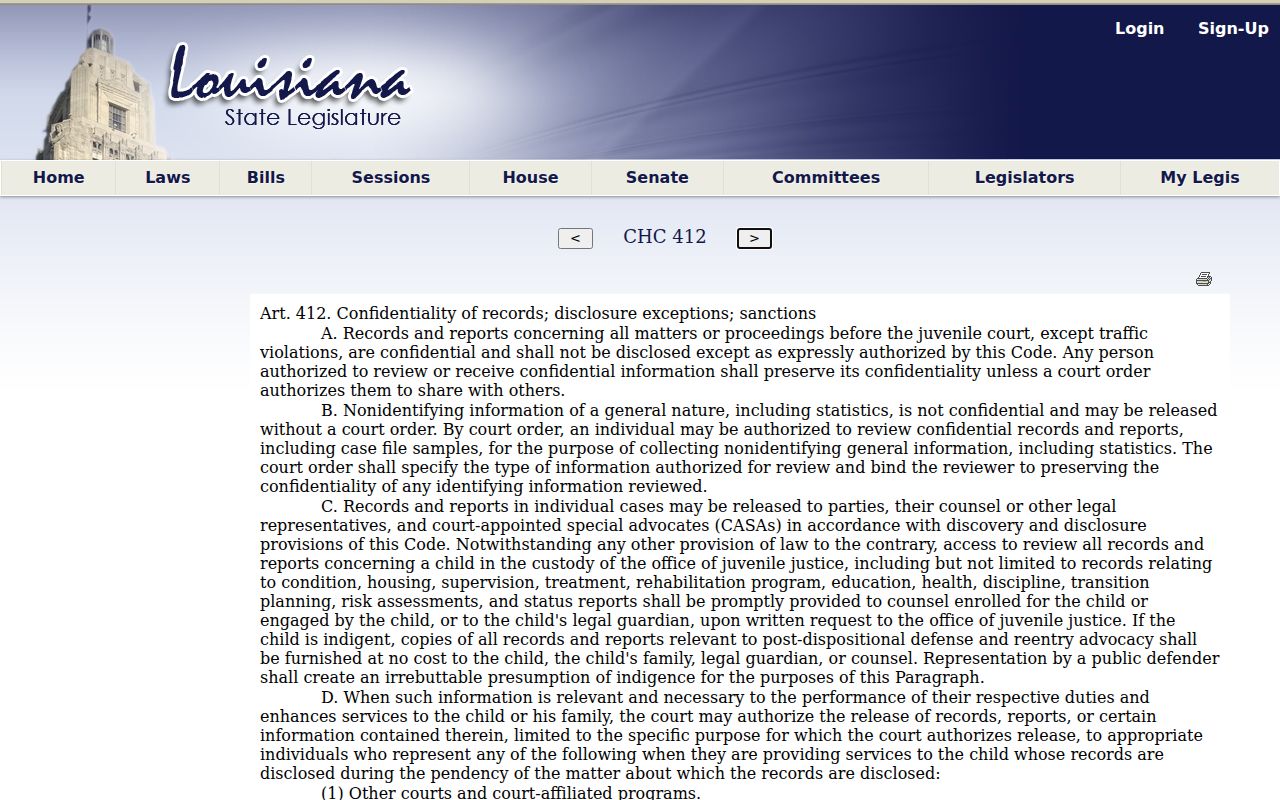
Confidentiality applies even when other district-court docket information is available for examination.
Sealed Dockets and Public Access
La. C.C.P. art. 251 names the Clerk as legal custodian of judicial records and generally allows examination and copying during required office hours, unless another law limits access. La. R.S. 44:1 supplies the broader public-record definition. Still, openness has limits. Not every criminal record in a Livingston Parish court docket is public.
Access boundary: Juvenile files are confidential. Expungement provisions in La. C.Cr.P. art. 973 give expunged records a confidential effect. Sealed filings, redacted identifiers, and judge-restricted material may need an order or a specific clerk process.
A missing result usually means a detail is off. Check the court, parish, year, case number, and spelling before assuming anything. Then ask the right custodian whether the file is restricted or needs a written request. Keep this in mind. A public docket entry is civic reference only, not proof of guilt, liability, or the truth of an allegation.
Livingston Parish Misdemeanor Docket Track
The 21st JDC assigns Division L to handle Livingston Parish misdemeanor, traffic, and juvenile matters. That label helps when a docket or notice points to district court. But it does not pull city-limit citations into the district system. A case inside a municipality may still belong to the city court or mayor's court that issued it. That is where the hearing will sit. The 21st JDC misdemeanor-probation office describes one program tied to this track.
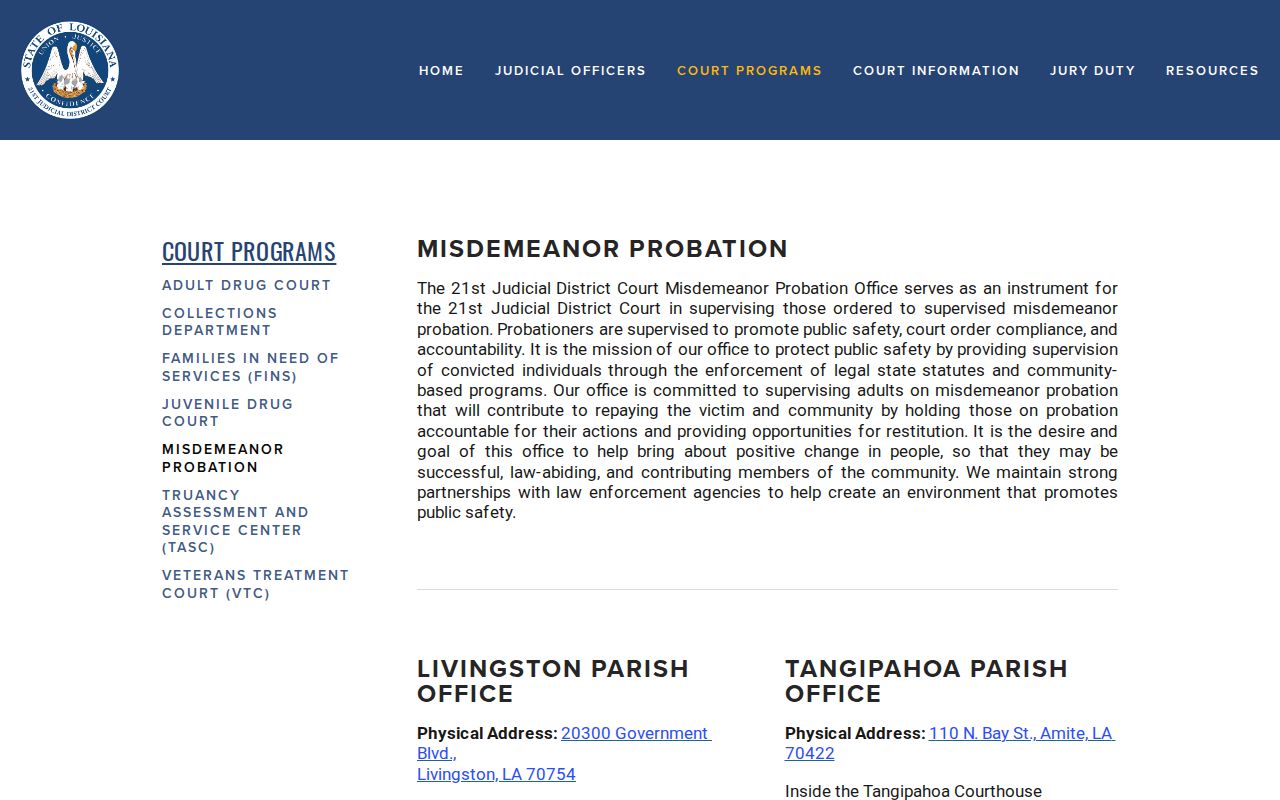
Put the division, parish, and docket details together before you request records or trust a posted setting.
Livingston Parish Criminal Search Limits
Livingston Parish offers no public criminal portal with a field-by-field party search. The DA postings show date and division settings only. They do not prove that every criminal case appears online.
A docket search can come up empty. Verify the court, parish, docket number, file number, spelling, and setting date. Then ask the Clerk's Criminal Department about the file. It may be held there, need a written request, or be restricted by confidentiality or an order. A city citation can still belong to a municipal or mayor's court. The issuing agency may work in the parish. Even so, the court named on the citation and the appearance address are your best routing facts.